The Lineage

The Stoics

Five centuries of thought, from a wrecked merchant on the shore of Piraeus to an emperor writing privately on the frontier. These are the voices that shaped the practice.

01 / The Greek Stoa

Athens, third century BC. A school named after a porch — open to anyone who would listen, founded on the conviction that a good life is a matter of practice.

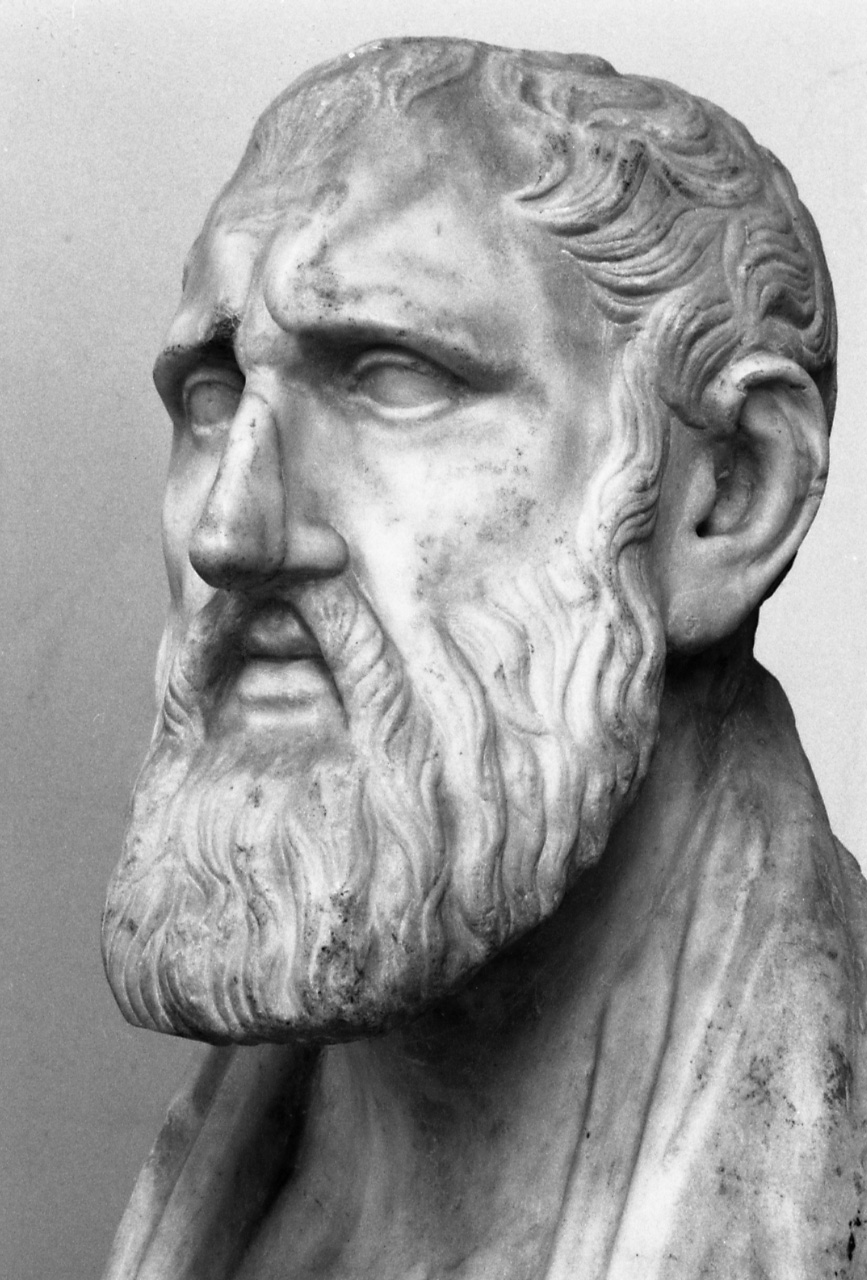
Bust of Zeno of Citium
Founderc. 334 – 262 BC

Zeno of Citium

A Phoenician merchant who, after a shipwreck near Athens, wandered into a bookshop, read of Socrates, and never returned to the sea. He began teaching at the Stoa Poikilē — the painted porch — from which the school took its name.

Man conquers the world by conquering himself.
Engraving of Cleanthes
Second scholarchc. 330 – 230 BC

Cleanthes of Assos

A former boxer who drew water by night to fund his studies by day. Less brilliant than his peers, but unmatched in steadfastness — he held the school together for thirty-two years and wrote the surviving Hymn to Zeus.

The willing are led by fate; the reluctant, dragged.
Roman copy of a bust of Chrysippus, British Museum
Systematizerc. 279 – 206 BC

Chrysippus of Soli

The school's intellectual architect. He wrote, by ancient count, more than seven hundred works on logic, physics, and ethics. The saying went: without Chrysippus, there would have been no Stoa.

Living virtuously is equal to living in accordance with one's experience of nature.

02 / The Roman Stoa

Three centuries later, the philosophy crossed to Rome — into the Senate, the schoolroom, the imperial court. Most of what survives of Stoicism today comes from these four lives.

Double herm of Socrates and Seneca, Antikensammlung Berlin
Statesman & dramatistc. 4 BC – AD 65

Seneca the Younger

Tutor to the emperor Nero and one of the wealthiest men in Rome — yet his letters return again and again to the brevity of life, the discipline of attention, and the futility of anger. Ordered by Nero to take his own life, he did so without complaint.

We suffer more often in imagination than in reality.
MR
The Roman Socratesc. AD 20 – 101

Musonius Rufus

A teacher of Epictetus, exiled twice for his criticism of tyranny. He insisted philosophy was for everyone — women and men, free and enslaved alike — and that it must be lived, not merely spoken.

If you accomplish something good with hard work, the labor passes; the good remains.
Frontispiece engraving of Epictetus, 1715
Freed slave & teacherc. AD 50 – 135

Epictetus

Born into slavery in Phrygia, lamed by his master, and later freed. He founded a school at Nicopolis where students came from across the empire. He wrote nothing himself; what survives are his lectures, transcribed by a devoted pupil.

It is not what happens to you, but how you react to it that matters.
Bust of Marcus Aurelius
Emperor of RomeAD 121 – 180

Marcus Aurelius

The last of the so-called Five Good Emperors. The Meditations were never written for publication — they are private notes to himself, written in Greek by lamplight in army camps along the Danube, on how to remain a decent man in a cruel position.

You have power over your mind — not outside events. Realize this, and you will find strength.